
Disclosure: This post, written with the assistance of ChatGBT, reflects the philosophy of Boyledown Lending Inc., a consumer finance company licensed by the Virginia State Corporation Commission (license #CFI-256.) The post is intended as informational content, but it also promotes the company’s lending model. As a result, it is an advertisement.
At Boyledown Lending Inc., we believe lending should be personal, not transactional.
That belief is rooted in a powerful idea — one inspired by Debt: The First 5,000 Years by anthropologist David Graeber. Graeber’s core argument is simple but profound:
You shouldn’t profit from a loan unless you’re also taking a risk.
Yet, much of modern personal lending is designed to erode that risk — and in doing so, erode the moral logic behind lending.
🔄 Real Lending Involves Risk — That’s the Point
In Graeber’s words, lending is a moral act — a leap of trust. When a lender offers a loan, they’re not just offering money. They’re making a bet on the borrower. The interest they earn is meant to compensate for the risk they take.
Risk justifies reward.
This is the moral core of ethical lending — and it only works when there’s a fair balance between two people: lender and borrower.
💬 Why Lending Is Moral — or Should Be
Lending is personal. It requires:
- Faith in the borrower’s character
- A social obligation for borrower to repay
- A real chance the lender won’t be paid back (lender carries risk)
Even though it’s about money, it’s not just economic.
It’s relational. Ethical. Built on trust, which is a moral value.
🏛️ Interest, When Honest, Reflects Risk — Not Exploitation
In its cleanest form, interest says:
“I took a risk on you — and if that risk pays off, I deserve something in return.”
That’s not exploitation. That’s a fair, mutual understanding:
- The lender isn’t giving away free money — they’re accepting vulnerability (lender might lose money.
- The borrower isn’t being punished — they’re offering fair compensation for that trust.
This is the moral core of ethical lending:
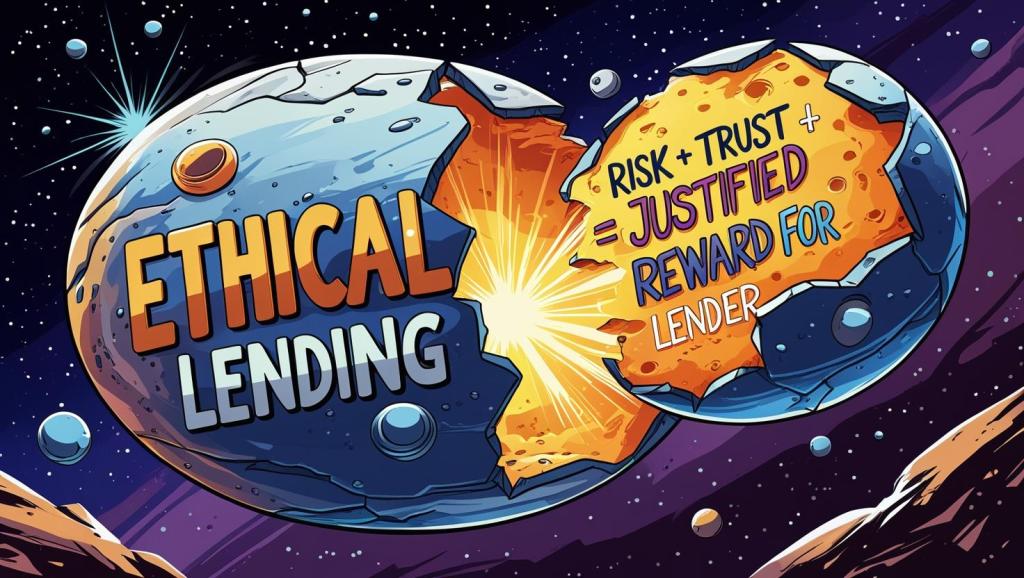
Risk + trust → justified reward.
👉 Learn why the moral core of an ethical borrower at Boyledown.
About the Author
David O’Boyle is the founder of Boyledown Lending Inc., a Virginia-based lender focused on relationship-driven, transparent borrowing. He believes lending should be personal — grounded in trust, clarity, and mutual accountability. When he’s not reviewing loan applications or writing about the history of debt, he’s exploring ways to make finance simpler, fairer, and more human.

 Boyledown Lending Inc.
Leave a reply to 📘 SERIES HUB: The Boyledown Philosophy on Lending and Borrowing: How Trust, Clarity, and Shared Risk Make Finance More Human – Boyledown Lending Inc. Cancel reply